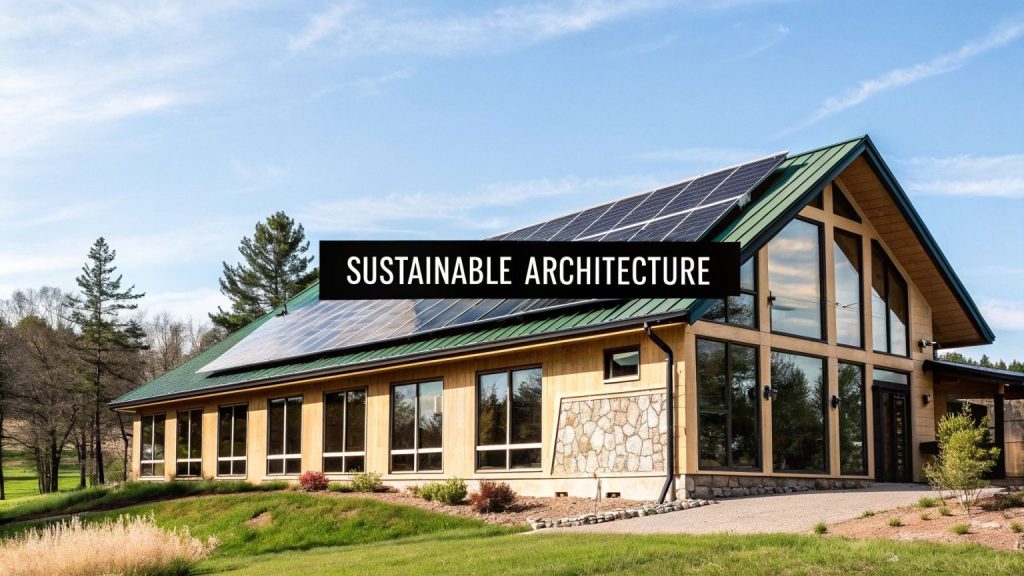
Sustainable architecture isn’t about chasing trends or adding a few “green” features to a building. At its core, it’s about designing smarter, creating spaces that work with their environment instead of against it.
A sustainably designed building uses what’s already there: sunlight, airflow, local materials, and climate conditions. When done well, the result is a home or building that costs less to operate, feels better to live in, and leaves a lighter footprint on the planet.
At VQ Design PLLC, we approach sustainability as part of performance-driven design. Every choice from how a building is oriented on its site to how materials are selected should serve a purpose and deliver long-term value.
What Does “Sustainable Architecture” Really Mean?
A sustainable building behaves more like a living system than a static object. Please think of how a tree functions: it absorbs sunlight, manages water naturally, adapts to its climate, and supports the ecosystem around it. Sustainable architecture follows a similar mindset.
Rather than relying solely on mechanical systems to correct problems later, sustainable design solves issues early through thoughtful planning. That includes how the building sits on the land, how it captures or blocks sunlight, how it breathes, and how long its materials will last.
This isn’t about perfection; it’s about making informed decisions that reduce waste and improve performance over time.
The Three Goals That Guide Sustainable Design
While every project is unique, sustainable architecture generally focuses on three key outcomes.
Reducing Environmental Impact
This includes minimizing waste, choosing responsible materials, and respecting the surrounding landscape. Using local or recycled materials and planning construction efficiently can significantly lower a project’s environmental footprint.
Improving Energy Performance
A well-designed building doesn’t need to work as hard to stay comfortable. Through proper insulation, smart window placement, shading, and ventilation, energy demand can be reduced before adding any technology.
Supporting Human Comfort and Health
Good design supports the people who use the space. Daylight, fresh air, comfortable temperatures, and low-toxicity materials all contribute to healthier, more enjoyable environments.
The Pillars of Sustainable Architecture at a Glance
| Focus Area | Design Approach | Long-Term Benefit |
|---|---|---|
| Environmental Impact | Local and recycled materials, efficient site planning | Lower carbon footprint |
| Energy Performance | Passive design first, efficient systems second | Reduced energy costs |
| Human Well-Being | Daylight, ventilation, healthier finishes | Better comfort and indoor air quality |
When these ideas work together, a building becomes more than shelter—it becomes a place that actively supports daily life.
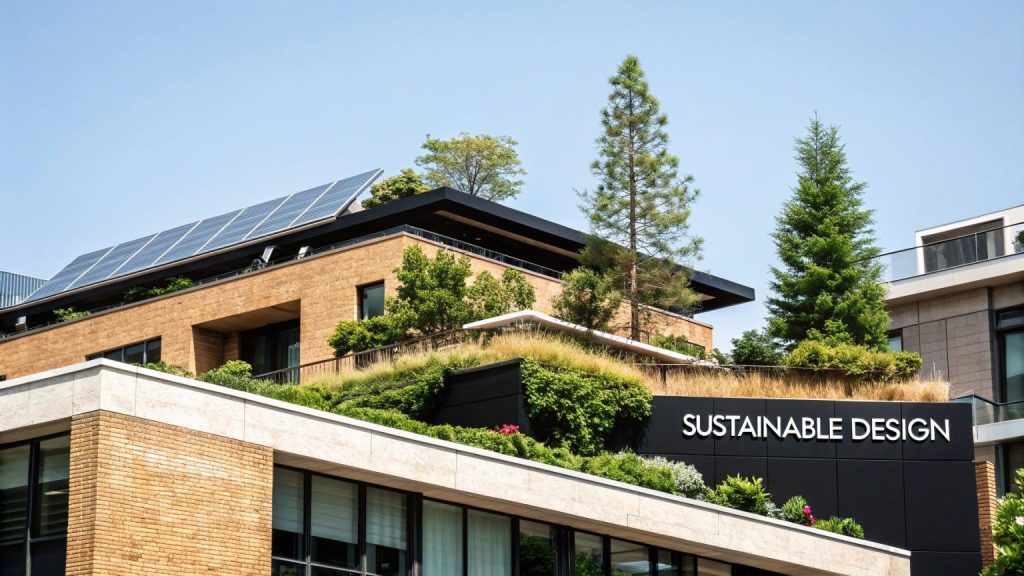
Why Balance Matters in Sustainable Architecture
Sustainable design isn’t just about environmental responsibility. It also needs to make sense socially and economically.
A home that’s energy-efficient but uncomfortable isn’t successful. Neither is a building that performs well but costs far more than it saves. The goal is to balance designs that respect the environment, enhance daily living, and remain financially practical over the long term.
For example, something as simple as planning for natural ventilation can reduce cooling needs significantly while improving indoor comfort—without increasing construction costs.
Designing for Climate and Place
One of the most important aspects of sustainable architecture design is responding to the location. Climate, terrain, sun exposure, and local building traditions all matter.
A design that works beautifully in one region may perform poorly in another. That’s why site-specific planning is essential. Materials, roof forms, shading strategies, and insulation levels should be chosen based on local conditions, not generic assumptions.
This approach not only improves performance but also helps buildings feel grounded in their surroundings.
Sustainability Works Best When It’s Designed In Early
The strongest sustainable projects don’t treat sustainability as an add-on. Instead, it’s woven into the design from the very beginning.
Key considerations often include:
-
- Managing water through grading and drainage
-
- Planning for daylight and natural airflow
-
- Selecting durable, low-impact materials
-
- Designing systems that are easy to maintain
Often, one design decision can serve multiple purposes. A well-placed roof overhang, for instance, can reduce heat gain, protect exterior materials, and define the building’s character at the same time.
Passive and Active Design: How They Work Together
Sustainable buildings rely on a smart balance between passive and active strategies.
Passive Design
These are design choices that reduce energy demand naturally:
-
- Orienting the building for sun control
-
- Using shading and insulation effectively
-
- Encouraging natural ventilation
-
- Maximizing daylight
Passive strategies reduce the need for mechanical systems in the first place.
Active Systems
Once energy demand is minimized, efficient systems step in:
-
- High-efficiency heating and cooling
-
- Energy recovery ventilation
-
- Smart controls
-
- Renewable energy systems, where appropriate
The most effective designs let architecture do most of the work before technology fills the gaps.
Materials Matter More Than Most People Realize
Every material has a story and an environmental cost. Long before a building is occupied, energy has already been used to extract, manufacture, and transport its components. This is known as embodied carbon.
Sustainable material choices consider:
-
- Durability and lifespan
-
- Sourcing and transportation distance
-
- Maintenance needs
-
- End-of-life reuse or recycling
Reclaimed wood, recycled steel, and low-carbon concrete mixes are just a few examples of materials that can reduce impact without sacrificing quality or aesthetics.
Certifications: Helpful Tools, Not Requirements
Programs like LEED or Passive House can be useful benchmarks, but they aren’t the only way to achieve sustainable results. Many well-designed buildings perform exceptionally without formal certification.
The right approach depends on project goals, budget, and local conditions. What matters most is thoughtful design—not just checking boxes.
Final Thoughts from VQ Design PLLC
Sustainable architecture is about building responsibly and intelligently creating spaces that perform well, feel good to live in, and remain valuable over time.
At VQ Design PLLC, sustainability is part of a broader commitment to performance-driven design. We focus on solutions that make sense for the site, the climate, and the people who will use the space every day.